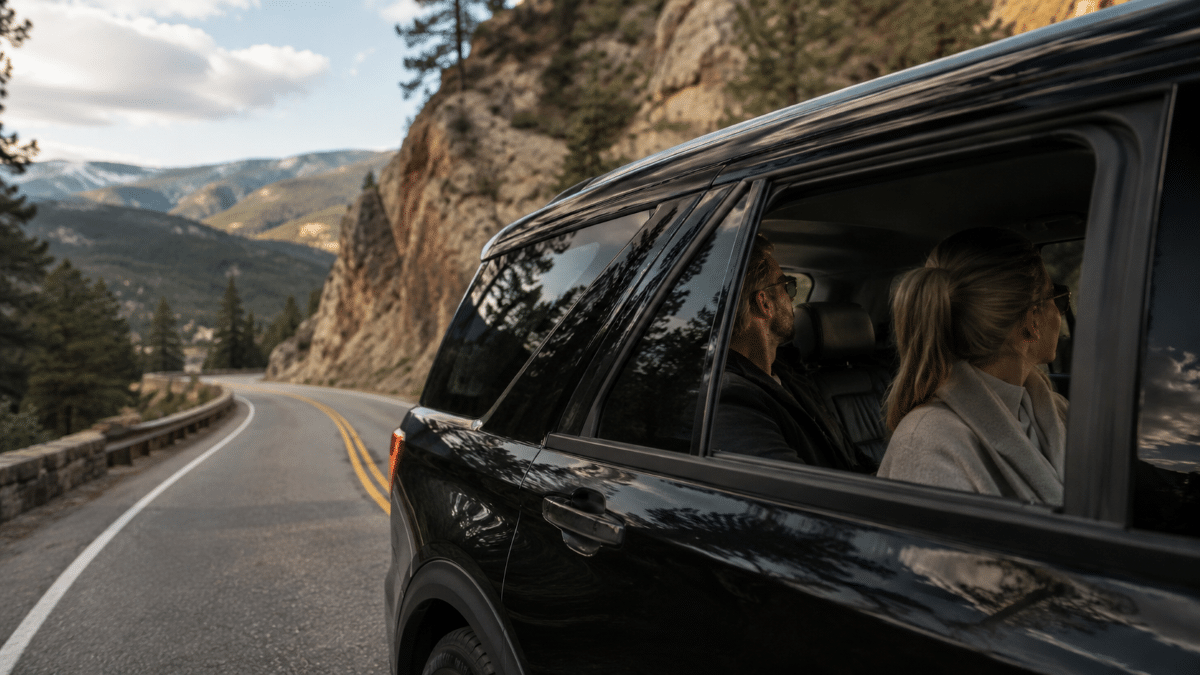
The route from Vail to Aspen covers roughly 100 miles of Colorado mountain terrain, crossing Glenwood Canyon before turning south through the Roaring Fork Valley. With Vail to Aspen car service, passengers move between the two resort communities in a private vehicle, without shared shuttles, transfer points, or last-minute coordination along the way.
This connection is part of a larger mountain itinerary: ski days in Vail, a private stay in Aspen, a wedding weekend, or a corporate retreat split between Colorado resorts. A professional chauffeur accounts for the full distance, canyon conditions, winter weather, luggage volume, and arrival details before the vehicle leaves Vail.
The road changes quickly west of Vail as I-70 enters Glenwood Canyon, a narrow mountain passage carved along the Colorado River between Dotsero and Glenwood Springs. High rock walls, tight lanes, and fast-moving weather make this the most demanding part of the trip.
Mudslides, rockfalls, flooding, and accidents can stop traffic here for hours, and detours around the canyon can add significant time.
After Glenwood Springs, Colorado 82 continues south through Carbondale, Basalt, and El Jebel toward Aspen. This final stretch is usually more predictable, though winter snowfall and resort-season traffic can still slow the approach.
Passengers sometimes ask about Independence Pass, the alternate road crossing a 12,095-foot summit into Aspen from the eastern side of the Rockies. This is scenic and significantly shorter than the Glenwood Canyon approach. However, Colorado officials close it each year from approximately November through late May, depending on snowpack and road conditions. No vehicle crosses the pass during ski season.
In summer, it opens for those seeking a different approach, but the road is narrow, steep in places, and unsuitable for large vehicles or substantial luggage. Guests with ski equipment or those riding in Sprinter-sized vehicles should expect to travel through Glenwood Canyon year-round. The right call depends on knowing when the pass is open, when the canyon road applies, and how quickly mountain weather can shift.
Aspen’s ski terrain spans four mountains: Aspen Mountain, Aspen Highlands, Buttermilk, and Snowmass. Guests sometimes arrive in Vail first, ski for a day or two, then continue west. Others land at Denver International Airport, arrive in Vail, and then need a direct connection to Aspen for the remainder of their mountain visit.
Vail to Aspen private transportation makes this sequence possible in a private vehicle, allowing people to move between destinations rather than rearranging ground logistics at each stop. Larger groups with ski bags, snowboards, and winter luggage need a vehicle with adequate cargo space. Corporate retreats, wedding parties, and extended family groups sometimes require two vehicles to get everyone west at the same time.
The 2027 Aspen/Pitkin County Airport closure may also affect some Vail-to-Aspen itineraries. People who arrive through another mountain airport may use Vail as part of a wider Colorado itinerary before continuing to Aspen. In those cases, the main planning concern is the ground connection itself: luggage, timing, canyon closures, and the final arrival point.
Aspen’s geography separates guests more clearly than most Colorado resorts. Downtown Aspen and Snowmass Village sit 12 miles apart, with different base areas, lift access points, and lodging clusters.
Common arrival points include:
Private addresses outside the main resort centers require familiarity with local roads to reach Vail, particularly during evening arrivals when resort traffic is heavier.
This connection happens midway through a larger mountain itinerary, not at the start of a trip. Several days of skiing add up: boots, helmets, ski bags, and personal belongings accumulate well beyond what the group originally packed for the flight into Denver. A Premium SUV works well for two to four passengers with a reasonable gear load. An Executive Sprinter is the better choice for larger groups or parties that need to carry luggage for five or six people in a single vehicle.
Private aviation passengers who land at ASE and later meet their group in Vail sometimes need a return from Lionshead to the resort. In those cases, the vehicle choice depends on the total passenger count, the amount of equipment, and whether additional stops are included in the route.
Weather does not move evenly between Vail, Glenwood Canyon, and the Roaring Fork Valley. A clear morning near Vail Mountain can still coincide with active snowfall farther west, especially during busy winter weekends.
An experienced chauffeur follows CDOT alerts, watches for canyon delays, and adjusts departure timing when needed. Summer is usually more consistent, though rockfalls and flooding can still affect I-70 through Glenwood Canyon.
The connection between Vail and Aspen moves through some of the most demanding terrain in Colorado. Mountain weather, canyon closures, and seasonal pass restrictions all affect the trip in ways that a rental car or rideshare app cannot account for.
Vail to Aspen transportation connects passengers directly between two of Colorado’s most established mountain resort communities, with vehicle options that match different group sizes, luggage volumes, and arrival windows. For private transportation between Vail and Aspen, contact Vail Limo at +1(970) 471-8540 or reservations@vailcolimo.com with your pickup location, arrival point, passenger count, and preferred departure time.
Most trips take between two and two and a half hours in favorable conditions. Delays, winter snowfall, and heavy traffic through the valley can add significant time to the total trip.
The canyon is generally open year-round, but it may close without notice due to rockfalls, mudslides, accidents, or flooding. During closures, the alternate route adds several hours to the trip between Vail and Aspen.
No. Independence Pass closes each year in late fall and typically reopens in late May, depending on snowpack. In winter, all ground transportation between Vail and Aspen follows I-70 and Colorado 82 through Glenwood Canyon.
Yes. Vehicle choice depends on the number of passengers, ski bags, snowboards, boots, and personal luggage. A Premium SUV usually works well for smaller parties with a moderate gear load, while an Executive Sprinter is a better fit for larger groups or those carrying equipment for several days of skiing.